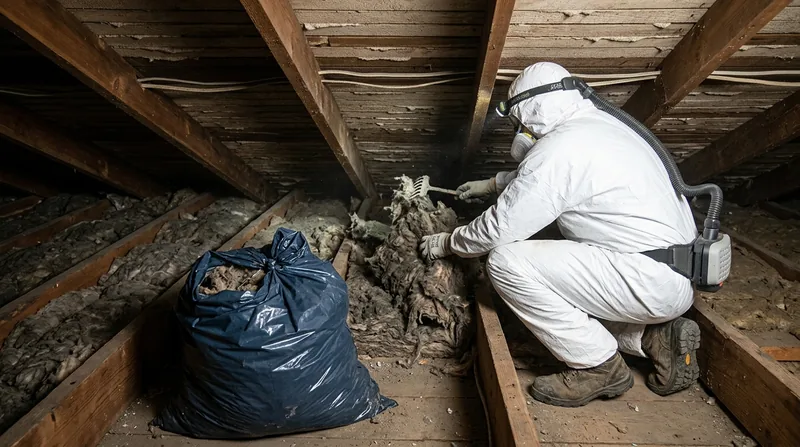




Insulation Removal in Utica is the necessary first step before any spray foam retrofit can begin. Older homes across East Utica, Cornhill, and the surrounding Mohawk Valley communities often carry decades of compressed, moisture-damaged, or rodent-contaminated insulation in attics, walls, and crawl spaces. Before new foam can seal and insulate properly, that failed material must come out cleanly and completely. We remove old insulation so the cavity is dry, sound, and ready for the controlled application of spray foam that will actually hold its R-value through the long Utica winters and the humidity swings of spring thaw.
Why Insulation Removal Matters in Utica's Older Housing Stock
The Victorian and early-twentieth-century homes of East Utica, Cornhill, and Herkimer were built with thin or no wall insulation and vented attics designed for a much milder climate. Fiberglass batts and blown-in cellulose from the 1970s and 1980s absorb moisture, settle, and break down. Stone and block foundation walls in homes near the Mohawk River draw dampness upward into rim joists and band joists, and any insulation sitting against that cold, wet substrate fails. Rodents nest in attics and walls across New Hartford and Whitesboro, shredding batts and leaving droppings that make old insulation both a health risk and an air-sealing liability. When you add heavy lake-effect snow loads and ice damming along the eaves of weak attics, the case for removal and replacement becomes clear: the old material is holding moisture, blocking airflow, and working against every dollar you spend on heating.
- Compressed or settled batts lose R-value and trap moisture against framing and rim joists.
- Rodent-damaged insulation becomes a vector for odors and health concerns that new foam cannot fix.
- Wet cellulose and fiberglass in crawl spaces and attics over stone foundations fail to resist the Mohawk Valley's spring thaw and summer humidity.
- Removing failed insulation gives you a clean, dry baseline so new spray foam can adhere and cure at the manufacturer's specified thickness and ratio.
A sound removal is the foundation of a retrofit that will actually work.
Key info: Many homes in Utica and Rome built before 1985 contain fiberglass or cellulose insulation that has settled by 30 to 50 percent, meaning it no longer meets its rated R-value. Removing it completely and replacing with spray foam restores the cavity's insulating power and eliminates the moisture trap that old material creates.
How We Remove Insulation: Step-by-Step Process in Utica
Insulation removal is not demolition, but it requires planning, containment, and the right equipment. We assess the scope on site, identify what material is present (fiberglass, cellulose, old foam, or mixed batts), confirm whether moisture or contamination is present, and determine the safest way to extract it without spreading debris or odors into living spaces. For attics, we use negative air containment and HEPA filtration to keep dust from settling into your home. For walls and crawl spaces, we work methodically to avoid disturbing framing, electrical, or plumbing. Once the cavity is empty and inspected, we address any moisture or damage before new foam goes in.
- We visit your home to inspect the existing insulation, identify the material type, and assess moisture and access.
- We set up containment barriers and negative air fans to control dust and odors during removal.
- We carefully extract old insulation from attics, walls, crawl spaces, or rim joists without disturbing wiring or structural components.
- We inspect the cavity for moisture, damage, or pest activity and address it before new foam is installed.
- We dispose of removed material responsibly and prepare the space for spray foam application.
The entire process protects your home and creates the clean foundation that makes a foam retrofit last.
Local example: A 1950s ranch in New Hartford with a vented attic full of settled fiberglass takes a full day to remove and inspect. A Victorian in Cornhill with wall cavities packed with old cellulose and a damp crawl space may take two days. We give you a firm timeline at the estimate so you know what to expect.
Insulation Removal Methods and What They Cost
| Approach | Description | Best for |
|---|---|---|
| Attic Removal with Containment | Negative air fans and HEPA filtration during extraction; dust stays contained and does not enter living spaces. | Settled fiberglass or cellulose in vented attics over occupied homes; prevents odor complaints and keeps your air clean. |
| Wall Cavity Removal | Methodical extraction of batts or loose-fill from walls without opening studs; preserves framing and wiring integrity. | Early-twentieth-century homes in East Utica and Cornhill with thin or empty wall cavities ready for injection foam retrofit. |
| Crawl Space and Rim Joist Removal | Removal of wet, moldy, or rodent-damaged insulation from foundation rim joists and crawl space walls; critical moisture assessment included. | Stone and block foundation homes near the Mohawk River where moisture is endemic and old insulation has failed. |
| Old Foam Removal | Extraction of failed or deteriorated spray foam from attics or walls; must be done before new foam can be applied. | Homes where previous foam installations have shrunk, cracked, or failed to maintain seal; common in older retrofits. |
Insulation Removal Cost in Utica: What to Expect
The cost of insulation removal depends on the size of the area, the type of material present, whether containment is needed, and accessibility. A straightforward attic removal in a New Hartford ranch starts at around $950 and goes up based on square footage and complexity. A crawl space with wet insulation and rim joist work costs more because moisture assessment and careful handling add time. Wall cavity removal from multiple rooms or a full Victorian in Utica's historic district takes longer and costs more than a single-story space.
The best way to understand the real cost for your home is to get a written estimate that specifies what material is being removed, the square footage, the containment method, and the disposal plan. We provide that estimate free and respond within 24 hours. Most homeowners find that the cost of removal is well worth it when they see the energy performance and comfort improvement that follows a proper spray foam retrofit. For a detailed breakdown of pricing and financing options, visit our pricing page.
What to Look for When Hiring an Insulation Removal Contractor Near Me
Finding a contractor who will remove insulation properly and prepare your home for spray foam is a critical decision. You are inviting someone into your attic, walls, or crawl space, and the quality of that work determines whether your new insulation will perform. Look for a contractor who can explain what material is in your home, why it failed, and what the removal and replacement plan looks like in concrete terms. Ask for a written estimate that names the method, the containment plan, and the timeline. Check that they are fully insured and can provide proof of coverage. Call references from recent jobs in Utica, Rome, or Herkimer and ask about dust control, odor management, and how clean the cavity was when the crew left.
Avoid any contractor who promises a price before visiting your home, who cannot explain the difference between open cell and closed cell foam, or who rushes you into a decision. Insulation removal and replacement is not an emergency in most cases, and the cheapest estimate is often a signal of corners cut. Get two or three estimates, compare the scope and the timeline, and choose the contractor who answers your questions clearly and seems to understand the specific challenges of your home's age and condition. When you are ready to discuss your project, contact us for a free, no-obligation estimate and we will walk you through the whole process.
Insulation Removal in Utica: Pricing Guide
| Service | Price | Details |
|---|---|---|
| Small attic removal (up to 500 sq ft) | Starting at $950 | Includes containment, extraction, and basic inspection; settled fiberglass or thin cellulose in accessible vented attics |
| Medium attic or wall cavity removal (500 to 1200 sq ft) | Starting at $1,400 | Multiple rooms or larger attic; includes negative air containment and disposal; moisture assessment adds to scope |
| Crawl space and rim joist removal with moisture assessment | Starting at $1,800 | Wet or rodent-damaged insulation; foundation inspection and moisture source identification included before new foam |
| Old foam removal or complex multi-area jobs | On estimate | Requires site visit to assess existing foam condition, framing damage, and accessibility before pricing is confirmed |
| Travel | Included | No separate mileage or travel fee within Utica, New Hartford, Rome, Herkimer, and surrounding Oneida County service areas |
| Free estimate | No charge | Written estimate with removal scope, containment method, timeline, and disposal plan; response within 24 hours at (315) 737-6731 |
Indicative pricing, the exact cost depends on square footage, finish, and site access. Free personalized estimate within 24h at (315) 737-6731.


