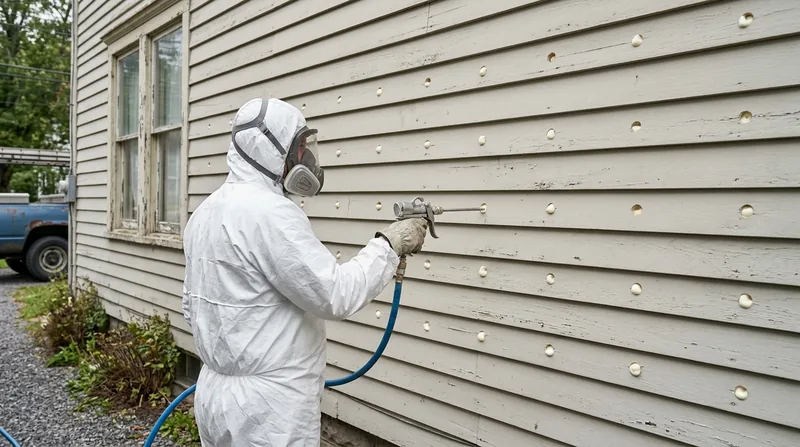




Wall & Injection Foam Insulation in Utica fills empty stud cavities in older homes without tearing open walls. East Utica and Cornhill are lined with Victorian and two-family homes built with hollow plaster walls that leak heat all winter long. Injection foam reaches into those cavities through small drilled holes, expands to fill the void, and is patched to match existing siding or plaster. For homeowners in Utica, New Hartford, Whitesboro, and Rome who face high heating bills from cold exterior walls, injection foam offers a retrofit path that avoids demolition. We've been doing this work since 2012, and we can walk you through the process, the cost, and what to expect from your local building department. Call us at (315) 737-6731 for a free estimate, or read on to understand why this work matters in the Mohawk Valley.
Why Wall & Injection Foam Insulation Matters in Older Utica Homes
Plaster walls in pre-1950 Utica housing were built with air gaps between the inner plaster and outer masonry or wood sheathing. Those cavities were never filled, and they remain hollow today. When outdoor temperatures drop to 10 degrees Fahrenheit and stay there for weeks, the inner face of those walls pulls heat from your living space. You feel the cold radiating from the wall, your thermostat runs longer, and your heating bill climbs. Injection foam seals that cavity and adds R-value where it counts most: at the envelope.
- We drill small holes through existing siding or plaster into the stud cavity.
- We inject closed-cell or open-cell foam that expands to fill the void completely.
- We patch the holes to match your existing exterior finish.
- The cavity is now sealed and insulated without opening walls or disturbing your home.
- Work takes hours, not days, and interior disruption is minimal.
This approach works best for walls that are difficult or expensive to access from inside, and for homeowners who want to upgrade insulation without a full renovation.
Local example: A Victorian on Genesee Street in Utica with three stories and original plaster walls over stone foundation. The second-floor exterior walls are noticeably cold to the touch in January. Injection foam into those cavities raises the wall temperature, reduces drafts, and cuts heating load on that floor by 20 to 30 percent without any interior demolition or dust.
New York State building code requires that any insulation installed in a wall cavity meet fire and smoke safety standards. Your local building department in Utica will specify whether a thermal barrier or ignition barrier is required at your address. We help you understand what applies and coordinate with the building official if a permit is needed. For more on how we handle air sealing and insulation together, see our air sealing service page.
How We Inject Foam Into Walls: Step-by-Step in Utica
Injection foam insulation is a measured, methodical process. We start with a site visit to understand your wall construction, identify the stud spacing, and confirm the cavity is empty and dry. If moisture is present, we do not inject. Wet substrate and foam do not mix, and we walk away before creating a problem. Once we confirm the wall is sound, we map out where holes will go, drill them to the right diameter, and inject foam at a controlled rate and pressure.
- We inspect the wall cavity with a borescope or moisture meter to confirm it is dry and empty.
- We drill small holes (typically 1.5 to 2 inches) through siding, sheathing, and into the stud bay at intervals.
- We insert injection tubes and pump foam into the cavity, filling from bottom to top.
- Foam expands slightly and conforms to the cavity, reaching corners and sealing air leaks.
- Once cured, we remove tubes, patch holes with trim or caulk, and finish to match your siding or plaster.
The entire job is completed in one day for most homes. Mechanical ventilation runs during and after injection to manage vapors. We observe a re-entry window of 24 to 48 hours before the space is fully usable.
Example from New Hartford: A mid-century ranch with 1970s vinyl siding over original wood sheathing. Exterior walls in the master bedroom are cold and drafty. We drill through the vinyl into the stud cavities behind it, inject foam, and patch the holes with vinyl trim that blends seamlessly. The wall is now sealed and insulated. Interior walls remain untouched. Homeowner notices warmer walls and lower heating bills within the first heating season.
If your home also has rim joists or an uninsulated attic, those are often better priorities. See our rim joist insulation page to understand where heat loss starts and how to prioritize.
Wall & Injection Foam Insulation Methods and Materials
| Method | Description | Best For |
|---|---|---|
| Closed-Cell Injection Foam | Dense foam with high R-value per inch, vapor-impermeable, resists moisture penetration. Injected into cavities where it expands and cures hard. | Exterior walls in cold climates, basements, walls below grade, any cavity where vapor control is critical. |
| Open-Cell Injection Foam | Lighter, more flexible foam with moderate R-value per inch, vapor-permeable, allows drying. Lower cost per board foot than closed-cell. | Interior walls, walls above grade where moisture control is less critical, sound dampening, budget-conscious retrofits. |
| Blown-In Insulation (Cellulose or Fiberglass) | Dry, loose-fill insulation blown into cavities via hose. Lower R-value per inch, settles over time, does not seal air leaks as effectively as foam. | Budget retrofit, attics, walls where foam is not feasible, supplemental insulation over existing batts. |
| Retrofit Wall Insulation Assessment | On-site inspection to determine cavity depth, width, condition, moisture, and whether injection or alternative method is appropriate. | Any retrofit project where cavity condition is unknown, moisture is suspected, or the best method needs to be determined before work begins. |
Wall & Injection Foam Insulation Cost in Utica: What to Expect
Injection foam insulation typically starts at $2 per square foot of wall cavity treated, though the final cost depends on several factors. Cavity depth, stud spacing, wall length, access difficulty, and the type of foam all affect the price. A single exterior wall in a ranch home might run $800 to $1,500. A full wrap on a Victorian with multiple stories could run $3,000 to $6,000 or more. The best way to know is to get a free estimate and talk to us about your specific walls.
Factors that move the cost up or down include cavity width (wider cavities need more foam), wall height and length (more surface area means higher total cost), siding condition (vinyl is easier to drill than wood clapboard or masonry), and access (tight spaces or obstructed walls take longer). If your wall is damp, has active water intrusion, or is contaminated, we stop and refer you to address the moisture problem first. Foam does not fix a leak, and we will not spray over a wet substrate.
Get two or three estimates before committing. Compare what each contractor includes, what R-value they promise, what thickness they specify, and whether they offer a written warranty on the work. Our estimates include R-value, thickness, the type of foam, the re-entry timeline, and a one-year workmanship warranty. See our full pricing page for more detail, and call (315) 737-6731 for a free estimate with no obligation.
What to Look for When Hiring a Wall & Injection Foam Contractor Near Utica
Not all spray foam work is equal, and the insulation trade includes both reputable local shops and out-of-state rigs that spray in an afternoon and disappear. Hiring the right contractor protects your investment and ensures the work meets code. Here is how to vet any contractor, including us.
- Verify the contractor is fully insured and can provide a current certificate of insurance before work starts.
- Ask for a written estimate that specifies R-value, foam thickness in inches, and the type of foam (closed-cell or open-cell).
- Confirm the contractor understands local building code and can explain what permits or thermal barriers apply at your address.
- Check references from at least two similar projects completed in the past two years in Utica or nearby.
- Ask about mechanical ventilation during cure and the re-entry timeline (24 to 48 hours is standard).
- Understand the warranty: one to three years on workmanship is honest. Lifetime warranties are a red flag.
If you are in an HOA or historic district, check whether architectural approval is needed before drilling holes. Most HOAs do not govern insulation, but some do restrict exterior work. Your local building department in Utica, New Hartford, Clinton, or Rome can tell you whether a permit is required and what code applies. Your local building department can tell you what applies at your address.
Ready to move forward? Contact us for a free estimate or call (315) 737-6731. We will inspect your walls, explain your options, and give you a clear price with no surprises.
Wall & Injection Foam Insulation in Utica: Pricing Guide
| Service | Price | Details |
|---|---|---|
| Single exterior wall (ranch or small home) | Starting at $800 | Covers drilling, injection, and patching of one wall, typically 800 to 1,200 square feet of cavity area |
| Multiple walls or full exterior wrap | Starting at $2/sq ft | Price per square foot of cavity treated. Larger projects and multi-wall jobs benefit from economies of scale and lower per-unit cost |
| Victorian or multi-story retrofit | On estimate | Complex homes with varied wall construction, multiple stories, or difficult access require site inspection to determine scope and cost |
| Travel and setup | Included | No separate mileage fee or travel charge within Utica and surrounding service areas |
| Free written estimate | No charge | Response within 24 hours at (315) 737-6731. Includes R-value, thickness, foam type, and one-year workmanship warranty |
Indicative pricing, the exact cost depends on square footage, finish, and site access. Free personalized estimate within 24h at (315) 737-6731.


