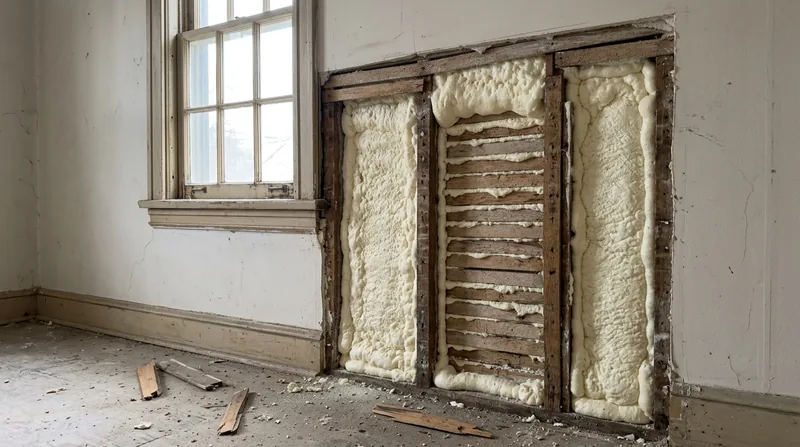




Open cell spray foam insulation in Utica fills the cold plaster walls and drafty rim joists that define the Mohawk Valley's housing stock. From Victorian two-families in Cornhill to mid-century ranches in New Hartford and Whitesboro, homes across Oneida and Herkimer counties lose heat through gaps at top plates, around window frames, and through empty wall cavities that feel cold all winter. Open cell foam expands to seal those penetrations and fills cavities in a single pass, cutting the drafts that drive heating bills from November through March. Unlike closed cell, open cell is breathable and works well in wall cavities where the primary failure is air leakage rather than moisture control. We help Utica homeowners understand when open cell is the right choice and when a different approach makes more sense. Our process starts with a clear written estimate that names the R-value, thickness, and board footage we plan to spray, so you know exactly what you are paying for before we arrive.
Why Open Cell Spray Foam Matters in Utica Homes
Early twentieth-century Utica homes have thin or empty wall cavities that offer almost no resistance to winter cold. The Mohawk River valley sits in the path of lake-effect snow and sustained cold, so walls that are not sealed and insulated become the primary heat loss path in a house. Open cell foam fills those cavities and seals air leaks at the same time, which is why it outperforms blown-in fiberglass on older homes. Mid-century ranches in New Hartford and Whitesboro often have better wall construction, but rim joists and band joists above basement walls remain uninsulated and leak heat directly into the foundation. A wall cavity filled with open cell foam also dampens sound transmission, which matters in older multi-family homes where party walls are thin.
- Open cell foam expands to fill irregular cavities and seal gaps around electrical outlets, rim joists, and top plates that fiberglass cannot reach.
- The material is breathable, allowing moisture trapped in wall cavities to dry toward the interior, which is important in older homes with damp foundation walls.
- A single pass of open cell achieves R-3.6 to R-3.8 per inch, so a 3.5-inch cavity in a standard 2x4 wall reaches R-12 to R-13 without additional framing.
- Open cell is less expensive than closed cell, making it the practical choice for retrofitting multiple walls in a 1920s or 1950s house.
- The material is low-VOC once cured and meets building code when installed with the proper thermal barrier.
These advantages make open cell the logical choice for wall insulation retrofit in the older residential neighborhoods of Utica, Rome, Herkimer, and Clinton.
Key info: New York building code requires a thermal barrier (typically 1/2-inch drywall or equivalent) between open cell foam and the living space to meet the fifteen-minute flame spread requirement. This is not a limitation of the product; it is a code compliance step that any reputable installer builds into the estimate. Always verify the thermal barrier requirement with your local building department before work begins.
For more detail on how open cell compares to other foam types, see our closed cell spray foam insulation page.
How We Install Open Cell Spray Foam Insulation in Utica
Our process begins with a site visit to measure wall cavities, identify electrical boxes and penetrations, and confirm that the substrate is dry and sound. We remove old insulation if necessary, or work around existing fiberglass in walls where the cavity is already partially filled. We set up mechanical ventilation to manage off-gassing during the cure period, which typically takes twenty-four to forty-eight hours before the space is safe to re-enter. We spray at the manufacturer-specified ratio and drum temperature, holding thickness to the specification in your estimate so you receive the R-value we quoted.
- We inspect the wall cavity for moisture, active leaks, or contamination and walk away if the substrate is not dry enough to accept foam.
- We seal air leaks around rim joists, top plates, and electrical penetrations before filling the cavity itself.
- We spray in passes no thicker than 2 inches per day to ensure proper rise and density, never rushing a wall to finish faster.
- We install or confirm the presence of a thermal barrier (typically 1/2-inch drywall) between the foam and living space to meet code.
- We provide a written record of the board footage sprayed, the R-value per inch, and the total thickness so you can verify the work against your estimate.
This careful approach is why homeowners in New Hartford, Whitesboro, and Yorkville choose us over rig-and-run crews that promise to finish a wall in an afternoon.
Real example: A 1950s ranch in Whitesboro had cold exterior walls on the north side and heating bills that climbed to $250 a month in January. The walls were 2x4 with empty cavities. We sprayed 3.5 inches of open cell foam into both walls, sealed the rim joist above the basement, and the homeowner reported noticeably warmer walls and lower bills by February. The job took two days including setup and cure time.
For more detail on our overall approach to air sealing, see our air sealing service page.
Open Cell Spray Foam Insulation Methods and Applications
| Method | Description | Best For |
|---|---|---|
| Wall cavity fill | Open cell foam sprayed into empty 2x4 or 2x6 cavities in exterior walls, sealed with drywall or plaster. | 1920s-1960s homes with thin or missing insulation; retrofit without tearing down walls. |
| Rim and band joist sealing | Open cell applied to the rim joist band above basement walls, sealing air leaks and filling gaps around rim board and sill plate. | Stone and block foundation walls in Utica, Rome, and Herkimer; reduces basement drafts and heat loss. |
| Top plate and penetration sealing | Open cell sprayed around electrical boxes, plumbing penetrations, and the top plate where the wall meets the attic. | Air sealing in preparation for attic work or as a standalone retrofit in homes with vented attics. |
| Partial wall fill with air sealing | Open cell foam fills the lower half or upper half of a wall cavity, combined with fiberglass or blown-in insulation in the remaining space. | Budget-conscious retrofit where the cavity is partially filled already and only air sealing and top-up are needed. |
Each method is chosen based on the wall construction, the existing insulation (if any), and your budget. We discuss the trade-offs in the estimate so you understand why we recommend one approach over another.
Open Cell Spray Foam Insulation Cost in Utica: What to Expect
Open cell spray foam insulation typically starts at $0.55 per board foot in the Utica market, though the actual cost depends on wall size, cavity depth, the amount of air sealing required, and whether we are removing old insulation first. A standard 2x4 wall cavity that is 3.5 inches deep costs less to fill than a deeper cavity or one that requires extensive sealing around penetrations. If we are working in a home with vermiculite insulation or other materials that need careful removal, that adds time and cost. Travel within Utica, New Hartford, Whitesboro, Rome, and surrounding areas is included, so there is no separate mileage fee.
- Wall cavity depth (2x4 versus 2x6) affects board footage and therefore total cost.
- Removal of existing insulation, old fiberglass, or other debris adds labor and disposal cost.
- The number of electrical outlets, plumbing penetrations, and rim joist sealing required determines how much air sealing is included in the estimate.
- Drywall installation or repair to provide the required thermal barrier is a separate cost and varies by wall area and condition.
- Getting multiple estimates from different contractors helps you understand the range and see which shops are clear about what they are including.
We provide a written estimate with the R-value, thickness, and board footage so you can compare apples to apples with other quotes. For more detail on pricing across all our services, visit our pricing overview page.
Open Cell Spray Foam Insulation Near Me: What Utica Homeowners Should Know When Hiring
Hiring a spray foam contractor is a decision that affects your home's comfort and energy bills for years, so it is worth taking time to verify credentials and understand what you are paying for. Ask any contractor whether they carry full insurance and request a certificate of insurance that names your address as an additional insured. Check references from recent jobs in your neighborhood, and ask to see photos of completed walls or rim joists so you can see the quality of the install and the thermal barrier installation. Verify with your local building department whether a permit is required for wall insulation work in your city, and whether any thermal barrier or ignition barrier rules apply. If you live in a homeowners association, check whether exterior work or interior modifications require HOA approval before we begin.
- Request an estimate that lists the R-value per inch, the total thickness, and the board footage so you know exactly what you are paying for.
- Ask whether the contractor will provide mechanical ventilation during cure and what the re-entry window is (typically twenty-four to forty-eight hours).
- Confirm that the contractor will inspect the wall cavity for moisture or contamination and will not spray if the substrate is not dry enough.
- Verify that a thermal barrier (typically drywall) is included in the scope and the estimate, not quoted as an add-on after the foam is sprayed.
- Get estimates from at least two local contractors so you can compare price, scope, and the clarity of the written estimate.
If you are ready to move forward, call us at (315) 737-6731 or use our contact page to request a free estimate. We respond within 24 hours and can usually schedule a site visit within a few days.
Open Cell Spray Foam Insulation in Utica: Pricing Guide
| Service | Price | Details |
|---|---|---|
| Wall cavity fill (open cell) | Starting at $0.55/board ft | Includes foam, sealing of electrical boxes and penetrations, thermal barrier prep. Cost varies by cavity depth and existing insulation removal needs. |
| Rim joist and band joist sealing | Starting at $0.55/board ft | Seals air leaks above basement walls, fills gaps around sill plate and rim board. Price depends on joist length and complexity of foundation type. |
| Top plate and attic edge sealing | Starting at $0.55/board ft | Seals penetrations and gaps where walls meet attic, reduces warm air movement into vented attic space. Smaller scope, lower board footage than full wall fill. |
| Insulation removal and replacement | On estimate | Removing old fiberglass, blown-in, or other insulation before foam install requires site inspection to confirm material type and disposal requirements. |
| Travel and estimate | Included / Free | No mileage or travel fee within Utica, New Hartford, Whitesboro, Rome, and surrounding service areas. Free written estimate with no obligation to book. |
Indicative pricing, the exact cost depends on square footage, finish, and site access. Free personalized estimate within 24h at (315) 737-6731.


