Understanding R-Value: The Foundation of Insulation Decisions
When homeowners in Utica start researching insulation options, R-value becomes the central number in every conversation. R-value measures thermal resistance, or how well a material resists heat flow. The higher the R-value, the better the insulation performs. However, not all insulation materials deliver the same R-value per inch, which is why understanding this metric is critical before choosing between air sealing and full spray foam solutions.
Attic Spray Foam Insulation typically delivers between 3.5 and 6.5 R-value per inch, depending on whether you select open-cell or closed-cell foam. Open Cell Spray Foam Insulation hovers around 3.5 to 3.6 R-value per inch, while Closed Cell Spray Foam Insulation reaches 6 to 6.5 R-value per inch. Traditional fiberglass batts, by contrast, deliver only 3.2 to 3.8 R-value per inch. This difference matters significantly when you're trying to meet state requirements and maximize energy efficiency in your home.
R-Value Requirements by State: What New York Demands
New York State has established specific insulation requirements based on climate zone and building type. For attics in most of New York, including the Utica area, the recommended attic insulation R-value is R-38 to R-49, depending on whether you're building new or retrofitting an existing home. These requirements reflect the state's cold winters and the need to prevent heat loss through the attic, which is responsible for up to 25 percent of a home's total heat escape.
Achieving R-38 with traditional fiberglass requires approximately 10 to 12 inches of material, while the same R-value with closed-cell spray foam requires only about 6 inches. This difference in thickness directly impacts installation feasibility, especially in attics with limited clearance or existing obstructions. Homeowners in New Hartford and surrounding communities often find that spray foam solutions allow them to meet state requirements without sacrificing valuable attic space.
Air Sealing vs. Full Spray Foam: Which Approach Wins?
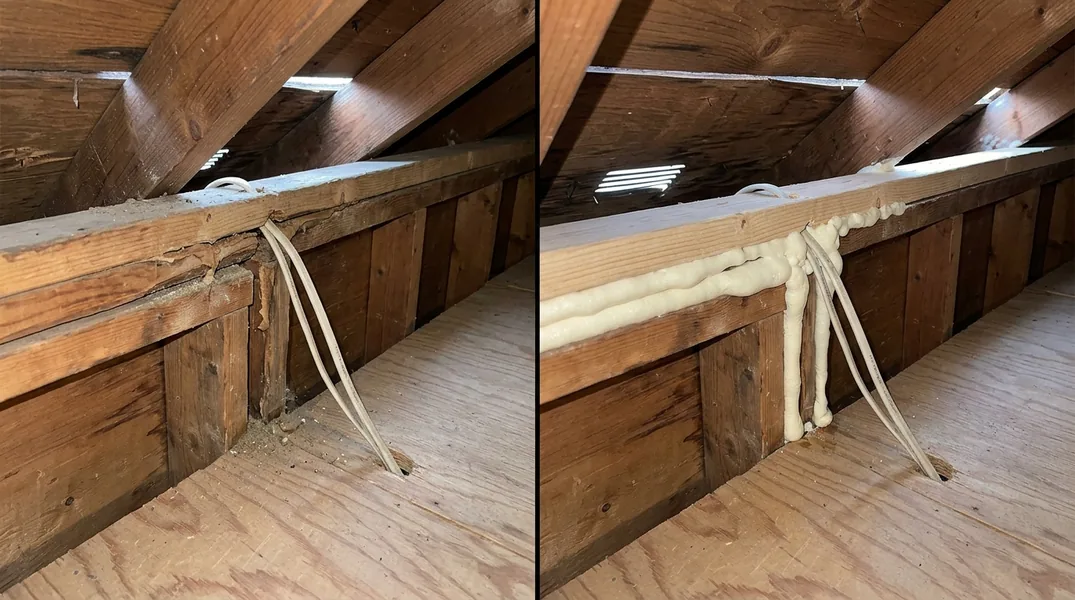
Air sealing and full spray foam insulation represent two different philosophies for improving home energy efficiency. Air sealing focuses on identifying and plugging air leaks around electrical outlets, window frames, door seals, ductwork, and other penetrations. It's typically done using caulk, weatherstripping, or foam sealant. Full spray foam insulation, by contrast, creates a continuous thermal and air barrier that simultaneously insulates and seals the entire attic space in one application.
The honest answer for most Utica homeowners is that air sealing alone is rarely sufficient to meet modern energy standards. While air sealing is cost-effective and addresses real energy waste, it doesn't provide the R-value needed to comply with New York State requirements or deliver the energy savings homeowners expect. Air sealing might reduce air leakage by 10 to 15 percent, but without adequate insulation R-value, your heating and cooling costs will remain high. Full spray foam, on the other hand, addresses both problems simultaneously. It seals air leaks while providing superior insulation performance in a single step.
For most homes in the region, the ideal solution combines air sealing with spray foam insulation. A professional contractor will first identify major air leaks and seal them strategically, then apply spray foam to create a comprehensive thermal envelope. This hybrid approach delivers maximum efficiency and ensures you're not wasting money on either solution alone.
How Thick Should Spray Foam Be? Finding the Right Depth for Your Attic
Determining the correct spray foam thickness depends on your target R-value, the type of foam you select, and your local climate requirements. Since closed-cell spray foam delivers approximately 6 R-value per inch, reaching R-38 requires about 6.3 inches of material. To achieve R-49 (recommended for colder climates), you'd need approximately 8 inches. Open-cell foam, delivering 3.5 R-value per inch, would require 11 inches for R-38 and 14 inches for R-49.
The practical consideration is attic clearance. Many older homes in Yorkville and surrounding areas have limited headroom, roof rafter spacing, or existing obstacles that make thicker applications difficult. This is where closed-cell spray foam's superior R-value per inch becomes invaluable. You achieve better insulation performance with less material, preserving usable attic space and reducing installation complexity. Your contractor will assess your specific attic conditions and recommend the optimal thickness to meet New York State requirements while working within your physical constraints.
Rebates: Making Spray Foam More Affordable
The federal insulation tax credit ended on December 31, 2025, so ask your utility company about any current rebates instead.
New York State also administers rebate programs through utilities and energy efficiency initiatives. The key is verifying eligibility before starting work. When comparing pricing between contractors, ask which utility rebates they have seen homeowners use. Checking these programs before you start can reduce your net cost, making premium spray foam solutions more competitive with cheaper alternatives.
Attic Spray Foam Insulation Cost in Utica: What to Budget
Spray foam insulation costs vary based on attic size, foam type, and existing conditions. Open-cell spray foam typically ranges from 50 cents to 85 cents per board foot, while closed-cell spray foam costs between $1.00 and $1.50 per board foot. For a typical 1,200-square-foot attic requiring 6 inches of closed-cell foam, expect to invest between $3,500 and $5,500 before rebates.
While spray foam costs more upfront than fiberglass batts, the energy savings typically justify the investment. Homeowners report 15 to 30 percent reductions in heating and cooling costs after spray foam installation, meaning the system often pays for itself within 5 to 7 years. When you factor in increased home comfort, improved indoor air quality, and protection against moisture and pests, the value proposition becomes even stronger. To understand exactly what spray foam installation would cost for your specific home, contact Utica Spray Foam Insulation at (315) 737-6731 for a free estimate. We'll assess your attic, calculate the required thickness, and provide a detailed quote including available rebates.
Looking for a professional spray foam insulation contractor in Utica? Utica Spray Foam Insulation responds fast for all your spray foam insulation needs.
Get a Free Quote