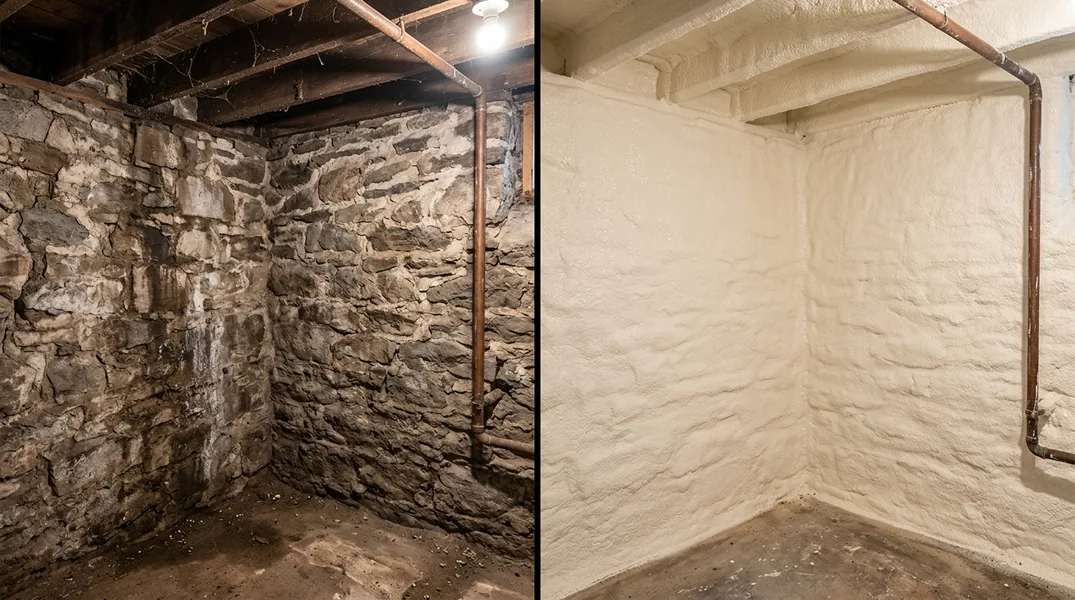
Understanding Spray Foam Insulation Types
When it comes to improving your home's energy efficiency, attic spray foam insulation has become one of the most effective solutions available to homeowners in Utica. However, not all spray foam is created equal. The two primary types, open cell and closed cell, offer distinct advantages and disadvantages that can significantly impact your home's comfort, energy bills, and long-term durability.
Before deciding which type is right for your attic, it's important to understand how these materials differ at a fundamental level. Both are applied as liquid that expands and hardens into a solid insulation layer, but their cellular structure and performance characteristics vary considerably. Making an informed choice between these two options can mean the difference between optimal home comfort and wasted energy dollars over the years.
Open Cell Spray Foam: Lightweight and Budget-Friendly
Open Cell Spray Foam Insulation features cells that are not completely closed, allowing air to move through the material. This creates a softer, more flexible foam that typically has an R-value of approximately 3.5 to 3.6 per inch. While this is lower than closed cell foam, open cell remains a highly effective insulation choice for many homeowners, particularly in climates where moisture management is less of a concern.
The primary advantage of open cell foam is its lower cost, making it an attractive option for budget-conscious homeowners looking to improve their attic's thermal performance. Additionally, open cell foam is permeable, meaning it allows water vapor to pass through it. This characteristic can be beneficial in certain applications where you want the attic to breathe naturally, though it also means that open cell foam should not be used in areas prone to excessive moisture or where a true vapor barrier is required. The material is also lighter and easier to work with during installation, which can reduce labor costs for your project.
Closed Cell Spray Foam: Superior Protection and Performance
Closed Cell Spray Foam Insulation consists of cells that are completely closed and tightly packed together, creating a dense, rigid foam. This structure provides an impressive R-value of approximately 6.0 to 6.5 per inch, nearly double that of open cell foam. For homeowners in Utica seeking maximum insulation performance in a limited space, closed cell foam delivers exceptional thermal resistance.
Beyond superior R-value, closed cell foam offers a critical advantage: it acts as an air barrier and vapor barrier simultaneously. This means it prevents both air infiltration and moisture penetration, making it ideal for attics exposed to harsh weather conditions or potential water intrusion. Closed cell foam also adds structural rigidity to your attic, which some homeowners appreciate. The trade-off is higher upfront cost compared to open cell foam, but many homeowners find the investment worthwhile given the superior performance and durability. Closed cell foam is particularly valuable for creating a sealed attic insulation system that maximizes energy efficiency year-round.
Unvented Attic Spray Foam: Creating a Conditioned Space
One of the most significant advantages of spray foam insulation is the ability to create an unvented attic spray foam system. Traditionally, attics are vented to allow moisture and heat to escape, but this approach can waste significant amounts of conditioned air during winter and summer. By applying spray foam directly to the underside of your roof deck, you transform your attic into a conditioned space that's part of your home's thermal envelope.
This approach offers multiple benefits for homeowners. First, it eliminates the energy loss associated with vented attics, reducing your heating and cooling costs. Second, it allows you to potentially convert attic space into usable square footage for storage or even finished rooms. Third, it provides superior moisture control when done correctly with the right foam type. Closed cell foam is particularly effective for creating unvented attics because its vapor barrier properties prevent moisture accumulation, while open cell foam in an unvented attic requires careful ventilation planning to avoid moisture-related problems. For most homeowners in the region, working with experienced professionals ensures your unvented system performs optimally.
Attic Spray Foam Insulation Cost in Utica: What to Budget
Understanding the financial investment required for attic spray foam insulation is essential for homeowners planning this upgrade. Open cell foam typically costs between $0.50 and $1.00 per board foot, while closed cell foam ranges from $1.00 to $2.00 per board foot or higher, depending on thickness and application requirements. For a typical 1,000 square foot attic, you might expect to invest anywhere from $1,500 to $4,000 or more, with closed cell systems commanding premium prices due to their superior performance.
While these numbers might seem substantial, it's important to consider the long-term return on investment. Energy savings from improved insulation typically range from 15 to 30 percent on heating and cooling costs, meaning many homeowners recoup their investment within 5 to 10 years. Additionally, improved comfort, reduced ice damming in winter, and enhanced structural integrity add value beyond simple energy savings. To get an accurate understanding of pricing for your specific project, contact Utica Spray Foam Insulation at (315) 737-6731 or request a free estimate today. Our team can assess your attic's unique requirements and provide transparent pricing based on your home's needs.
Which Type Is Right for Your Utica Home?
Choosing between open cell and closed cell spray foam ultimately depends on your specific priorities, budget, and attic conditions. If cost is your primary concern and your attic doesn't face significant moisture challenges, open cell foam can deliver solid performance and meaningful energy savings. However, if you're seeking maximum R-value, superior moisture protection, and the ability to create a truly sealed attic insulation system, closed cell foam is the premium choice that delivers unmatched performance.
Consider also the climate in Utica and your home's specific vulnerabilities. Homes with history of moisture problems, ice dams, or poor attic ventilation typically benefit most from closed cell foam's superior vapor barrier properties. If you're planning to use your attic as conditioned storage or eventually convert it to living space, closed cell foam's rigidity and air-sealing capabilities make it the ideal choice. The best decision comes from a thorough assessment of your home's condition and your long-term goals. Contact the professionals at Utica Spray Foam Insulation today to discuss which option aligns with your needs and budget. Call (315) 737-6731 or visit our website to schedule your consultation and take the first step toward a more energy-efficient, comfortable home.
Looking for a professional spray foam insulation contractor in Utica? Utica Spray Foam Insulation responds fast for all your spray foam insulation needs.
Get a Free Quote