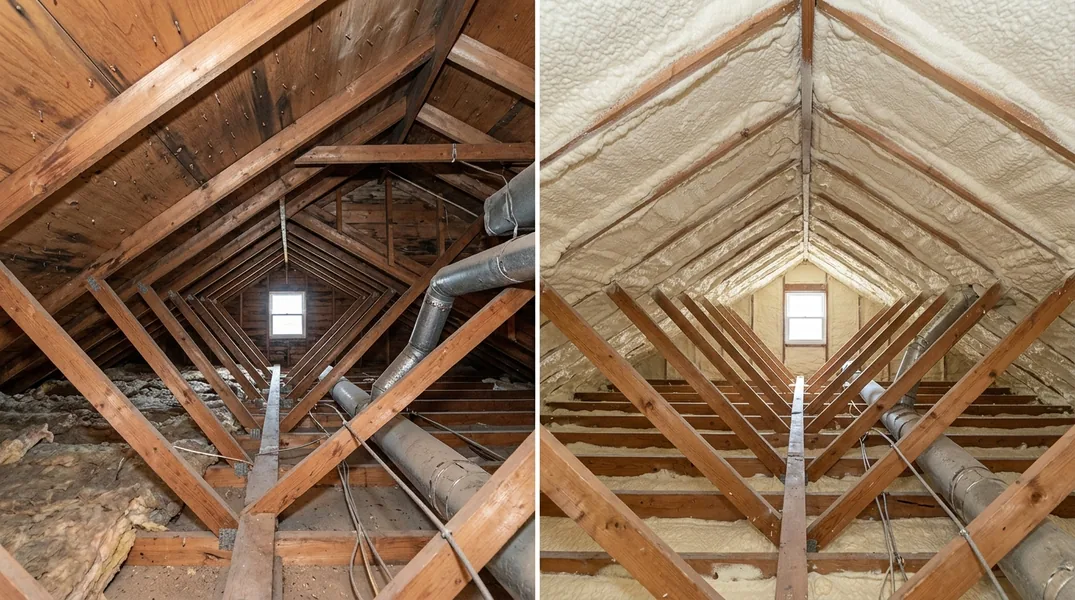
Understanding Stone Foundations and Crawl Space Challenges
Many older homes throughout Utica were built with stone foundations, a construction method that was common in the late 1800s and early 1900s. While stone foundations have proven their durability over the decades, they present unique challenges when it comes to insulation and moisture control. Stone is porous by nature, which means it readily absorbs and transmits moisture from the surrounding soil. This moisture migration into crawl spaces creates an environment where traditional insulation materials struggle to perform effectively.
Crawl spaces in these older homes are often poorly ventilated and prone to humidity buildup, condensation, and even standing water during heavy rains or spring thaw. The combination of moisture, temperature fluctuations, and limited air circulation makes crawl space insulation one of the most critical energy efficiency upgrades you can make. When moisture penetrates traditional insulation materials, they lose their thermal resistance and can develop mold, creating both an energy efficiency problem and a potential health concern for your family. Understanding these foundation-specific challenges is the first step toward choosing the right insulation solution for your Utica home.
Spray Foam vs Blown In Insulation: Which Performs Better Below Grade
When comparing spray foam vs blown in insulation for crawl spaces, the differences become immediately apparent when dealing with stone foundations. Blown in insulation, whether cellulose or fiberglass, relies on air pockets trapped within the material to provide thermal resistance. While this works reasonably well in attics where moisture control is less critical, blown in materials are highly susceptible to moisture absorption in below-grade applications. Once blown in insulation gets wet, it compresses, loses its R-value, and can harbor mold growth. Additionally, blown in insulation does nothing to seal air leaks or prevent moisture infiltration, which are primary concerns in older crawl spaces with stone foundations.
Closed Cell Spray Foam Insulation addresses these moisture challenges head-on. Closed cell foam creates a continuous, seamless barrier that not only insulates but also serves as a vapor retarder and air barrier. The foam expands to fill every gap, crack, and void in your crawl space, preventing moisture-laden air from infiltrating your home. Unlike blown in insulation, closed cell foam actually repels water rather than absorbing it. This makes it the superior choice for stone foundations where moisture management is paramount. The higher density of closed cell foam also provides structural rigidity, which can be beneficial in crawl spaces where settling or shifting has occurred over the decades.
Spray Foam vs Fiberglass: Long-Term Performance in Humid Environments
Fiberglass batts have been the standard insulation choice for decades, and many homeowners are familiar with their pink or yellow appearance. However, fiberglass has significant limitations in crawl space applications, particularly in older homes with moisture issues. Fiberglass is essentially spun glass fibers held together with a binder, and it performs well in dry environments like attics. But in a damp crawl space, fiberglass absorbs moisture like a sponge. Once saturated, fiberglass not only loses its insulating value but also becomes a breeding ground for mold and mildew. The fiberglass itself won't rot, but the moisture it traps creates conditions where organic materials nearby can deteriorate, potentially compromising the structural integrity of wooden beams and joists.
Spray foam, by contrast, is hydrophobic and maintains its performance even in consistently moist conditions. Open Cell Spray Foam Insulation is slightly more permeable than closed cell but still provides superior moisture management compared to fiberglass. For crawl spaces beneath older stone foundation homes in Utica, closed cell spray foam is typically the better choice because it provides the complete moisture barrier your foundation needs. The investment in spray foam pays dividends through improved energy efficiency, better indoor air quality, and protection of your home's structural components over the long term.
Best Insulation for Attic and Crawl Space: A Comprehensive Comparison
When homeowners ask about the best insulation for attic spaces and crawl spaces, the answer depends on the specific application and environmental conditions. For attics in dry climates, blown in cellulose or fiberglass can be cost-effective solutions. However, the best insulation for attic spaces in humid regions like upstate New York should account for potential moisture intrusion from roof leaks or ice dams. More importantly, if your attic is connected to or above a crawl space with a stone foundation, the insulation strategy for both areas should be coordinated to prevent moisture from migrating upward.
Spray foam emerges as the best overall insulation choice when you consider performance across multiple areas of an older home. It excels in attics where it can seal around penetrations and create an air-tight thermal envelope. It's even more valuable in crawl spaces where moisture control is critical. The continuous barrier created by spray foam prevents thermal bridging and air leakage, which means your heating and cooling systems don't have to work as hard. For homeowners in New Hartford and surrounding areas with older construction, this integrated approach to insulation can reduce energy bills by 15 to 30 percent while also improving comfort and durability.
Spray Foam vs Cellulose: Durability and Effectiveness in Stone Foundation Homes
Cellulose insulation is made from recycled paper products treated with fire retardants, and it's often marketed as an eco-friendly alternative to fiberglass. While the environmental credentials are appealing, cellulose has a critical weakness in crawl space applications: it's highly hygroscopic, meaning it readily absorbs moisture from the air. In a damp crawl space, cellulose can absorb up to 30 percent of its weight in water. When this happens, the insulation becomes heavy, can sag or settle unevenly, and loses much of its thermal resistance. Cellulose also tends to compact over time, which reduces its effectiveness even in dry conditions.
Spray foam, particularly closed cell formulations, offers superior durability in the challenging environment of a stone foundation crawl space. Closed cell foam maintains its R-value even when exposed to high humidity, it doesn't settle or compress over time, and it provides a 50-year lifespan with minimal degradation. While cellulose might seem like a budget-friendly option initially, the long-term performance issues and potential need for replacement make spray foam the more economical choice over the life of your home. When you factor in energy savings, structural protection, and the elimination of moisture-related problems, Attic Spray Foam Insulation and crawl space foam solutions represent a smart investment in your home's future.
Getting Professional Spray Foam Insulation Near Me: Next Steps for Utica Homeowners
If you own an older home in Utica with a stone foundation and suspect your crawl space insulation isn't performing, the first step is to have a professional assessment. A qualified spray foam contractor can evaluate your crawl space for moisture problems, air leaks, and thermal bridging. They'll also check for any existing mold or structural damage that needs to be addressed before insulation is applied. This comprehensive evaluation ensures that your insulation solution addresses the root causes of energy loss and moisture problems, not just the symptoms.
Utica Spray Foam Insulation specializes in helping homeowners with older properties understand their insulation options and implement solutions that actually work. Our team has extensive experience with stone foundation homes and the unique challenges they present. We can explain the differences between spray foam vs blown in insulation, spray foam vs fiberglass, and spray foam vs cellulose in the context of your specific home. We'll work with you to develop a comprehensive insulation strategy that improves energy efficiency, protects your home's structure, and enhances your comfort year-round. Ready to learn more about how spray foam insulation can transform your crawl space? Contact us at (315) 737-6731 to schedule your free estimate today, or visit our website at https://utica-spray-foam.com to learn more about our services and pricing.
Looking for a professional spray foam insulation contractor in Utica? Utica Spray Foam Insulation responds fast for all your spray foam insulation needs.
Get a Free Quote